Much of my work as an illustrator has been inspired by my knowledge and experience of art history: from the classroom, to the museum, to publication. I grew up visiting museums, so much so that they inspired me to pursue a Bachelor of Fine Arts in the Ateneo de Manila University. Even after graduation, however, I still continue to gather resources and see what more I can find.

Referencing Art History

The Garden Party • Las Meninas • Who’s Looking Zine

I like to think it all connects back to my relationship with museums. It was like the art I came across were new friends, and were encountered and re-encountered as old friends. In this way, art wasn’t something to just look at, it was something that was also constantly looking back at you.

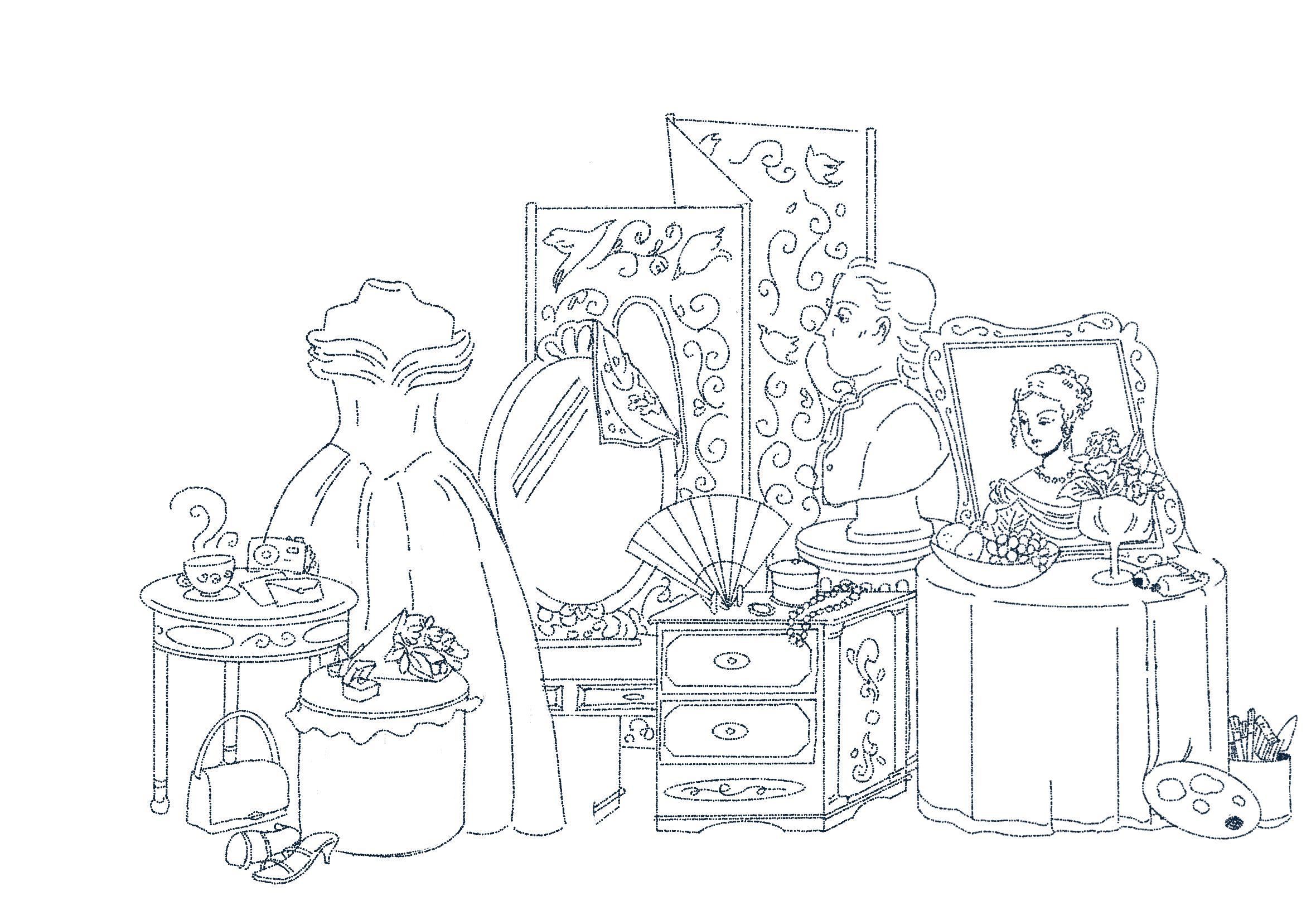
This was what my zine, Musee (2025), is about: me trying to illustrate what the museum experience, and also art in general, is actually like. In the zine, I subvert the perspective from the viewer to the artwork being viewed. As a piece of art history, one that has grown and changed over the years, I wondered what the piece could also be thinking about me today.

Who's Looking Zine
Writing, Illustration

VIEW IN SHOP

My library of reference as a designer and artist was built in this way all my life. This is why, when it comes to more personal work, it feels natural for me to refer to art history as my material. When I was contemplating my personal relationship with my gender and body, the first thing I thought of were the bodies in paintings, how nudes artworks of men and women looked to me.

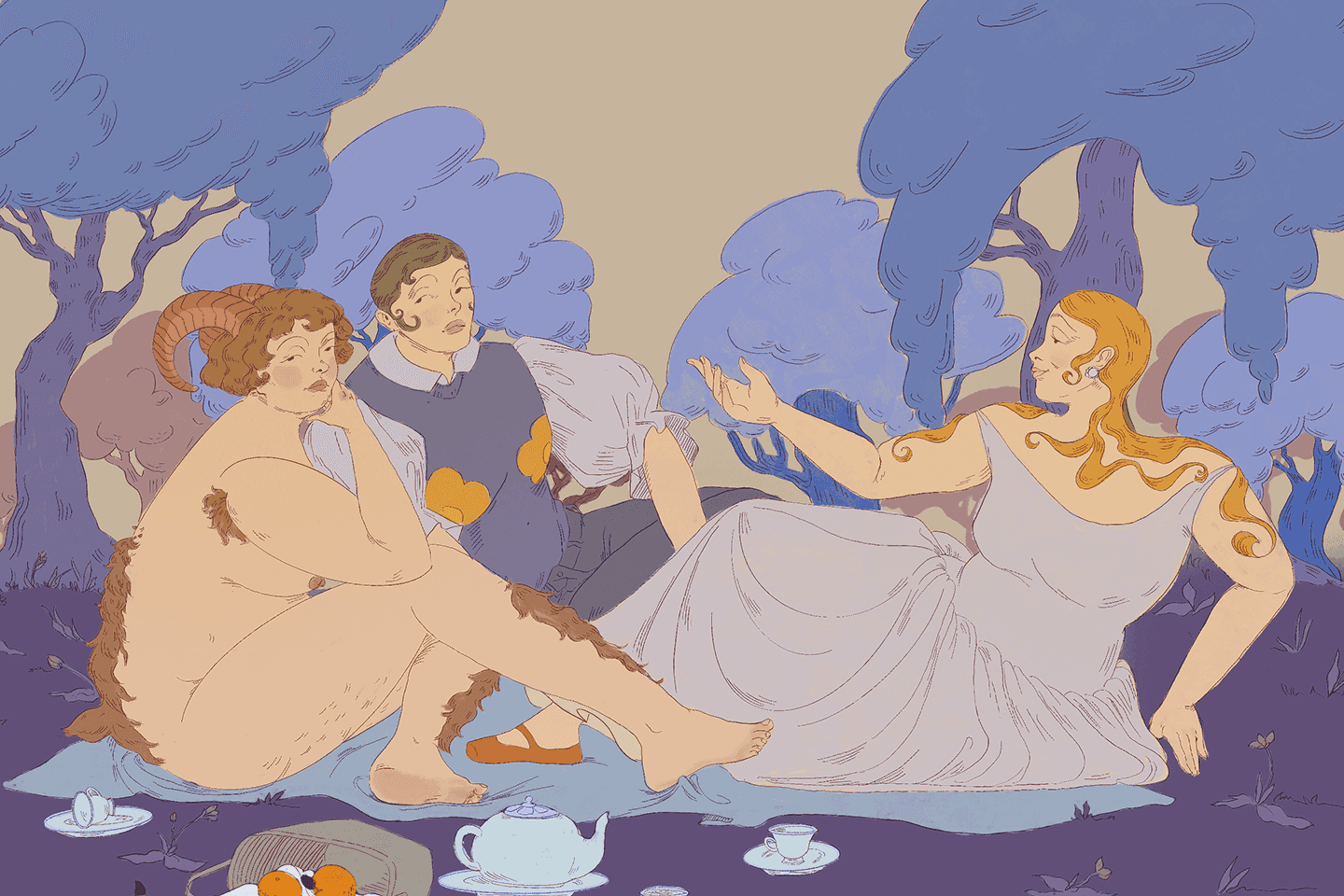
One that really flashed into my mind is The Luncheon on the Grass by Edouard Manet: two men, clothed according to their gender in the center of the picnic, relaxed and holding court, and an additional figure, a woman, starkly nude and unbothered right next to him.


I thought of these bodies, the clothes they wore, and how they held themselves, and I saw how gender performance physically shaped bodies in this social space. This is what inspired The Garden Party (2024), an illustration I made that reimagined this iconic art piece. Here, I brought the implied dynamics of gender of the original painting to the forefront, by subverting the iconography on the original piece: the clothes, the postures, the gazes. In the garden, no one is perfectly and comfortably positioned to one side of the spectrum; rather, both “man” and “woman” use the originally presented iconography to twist around these presentations. The final figure, the faun, serves as the complete middle, not man, not woman, but a body in its natural state, in all its glory.

Garden Party
Inspired by the work of Edouard Manet
Illustration

VIEW IN SHOP